Can Dogs Eat Beef Jerky?

Can Dogs Eat Beef Jerky? The Truth Every Dog Owner Must Know
If you’ve ever opened a pack of beef jerky, you’ve probably noticed your dog suddenly appearing out of nowhere, staring at you as if you owe them a piece. It’s almost impossible to resist those eyes, right? But here’s the thing—just because dogs want something doesn’t mean they should eat it. And beef jerky falls right into that tricky gray area where it seems harmless but can actually pose real risks.
So, can dogs eat beef jerky? The honest answer isn’t a simple yes or no—it depends heavily on the type of jerky, its ingredients, and how much your dog consumes. While plain dried beef can be safe in controlled conditions, most commercial jerky made for humans is loaded with ingredients that can harm your dog. Understanding these differences is crucial if you want to keep your furry friend healthy and avoid unexpected vet visits.
Let’s break it all down in a way that actually makes sense, so next time your dog gives you that look, you’ll know exactly what to do.
Understanding Beef Jerky
What Is Beef Jerky Made Of?
Beef jerky is essentially dried meat that has been preserved by removing moisture. Sounds simple, right? But here’s where things get complicated. In most commercial versions, the meat is marinated in a mix of salt, spices, sugar, and preservatives before being dried.
That means what you’re eating isn’t just beef—it’s beef plus a cocktail of flavor enhancers designed for human taste buds. While this makes jerky incredibly delicious and addictive for people, it creates a problem when dogs are involved.
Dogs process food very differently from how humans do. Ingredients that seem harmless to us can be overwhelming—or even toxic—for them. So even though the base ingredient (beef) is perfectly fine for dogs, the way it’s processed is where things start to go wrong.
Why Humans Love It (And Dogs Too)
Let’s be honest—beef jerky is one of those snacks that hits all the right notes. It’s salty, chewy, high in protein, and easy to carry around. Dogs, being natural carnivores, are instantly drawn to its smell and texture. It’s like offering them a piece of concentrated meat heaven.
But that appeal is exactly what makes it risky. Dogs don’t understand moderation or ingredient labels. If given the chance, they’ll happily devour far more than their bodies can handle. And because jerky is so concentrated, even a small amount can pack a serious punch in terms of sodium and additives.
Think of it like giving a child a handful of candy—they’ll love it, but it doesn’t mean it’s good for them.
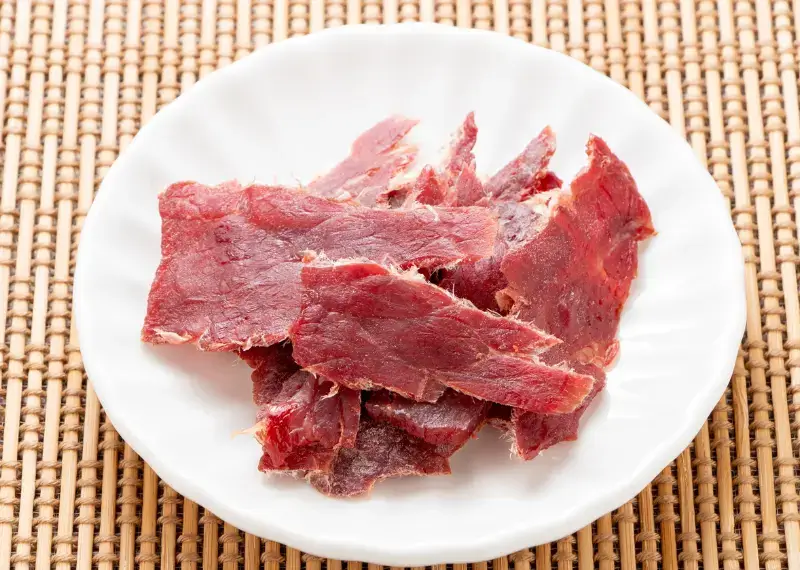
Can Dogs Eat Beef Jerky Safely?
The Short Answer
Most experts agree that dogs should not eat regular human beef jerky. The reason is simple: it’s not the beef that’s the problem—it’s everything else that comes with it.
A single ounce of beef jerky can contain around 600 mg of sodium, which is nearly three times the safe daily limit for a medium-sized dog. That’s a huge red flag.
When It Might Be Safe
Now, here’s where things get interesting. Not all jerky is created equal. Plain, unseasoned, homemade beef jerky can be a safe, protein-rich treat for dogs when given in moderation.
But—and this is important—it must meet very strict conditions:
- No added salt
- No garlic or onion
- No preservatives
- No artificial flavorings
If you’re thinking, “That doesn’t sound like any jerky I’ve ever bought,” you’re absolutely right. That’s why most store-bought options are off-limits.

Why Most Beef Jerky Is Dangerous for Dogs
High Sodium Content
Salt is the biggest issue with beef jerky. Because jerky is dried, the sodium becomes highly concentrated. Dogs are much more sensitive to salt than humans, and too much can lead to serious health problems.
Excess sodium can cause dehydration, excessive thirst, vomiting, and even seizures in severe cases. It’s not just uncomfortable—it can be life-threatening if ignored.
Toxic Ingredients Like Garlic and Onion
Here’s where things get even more serious. Many jerky brands include garlic or onion powder for flavor. These ingredients belong to the allium family and are toxic to dogs, damaging their red blood cells and potentially causing anemia.
Even small amounts can be harmful over time. That means sharing “just a little piece” isn’t as harmless as it seems.
Harmful Preservatives and Additives
Commercial jerky often contains preservatives like nitrates and nitrites, as well as artificial sweeteners such as xylitol. These are added to extend shelf life and enhance flavor—but they can wreak havoc on a dog’s digestive system.
Some additives have even been linked to long-term health risks when consumed regularly. So while your dog might not get sick immediately, repeated exposure can build up over time.
Health Risks of Feeding Beef Jerky to Dogs
Salt Poisoning and Dehydration
Salt poisoning is one of the most serious risks associated with beef jerky. Symptoms can include excessive thirst, confusion, tremors, and seizures.
Imagine drinking seawater when you’re already thirsty—that’s essentially what happens to your dog’s body when it consumes too much sodium.
Digestive Problems
Dogs that eat beef jerky often experience gastrointestinal issues such as vomiting and diarrhea. This is usually due to the combination of salt, spices, and preservatives that their digestive systems aren’t equipped to handle.
Even if symptoms seem mild at first, they can escalate quickly, especially in smaller dogs.
Long-Term Health Issues
Regular exposure to unhealthy ingredients can lead to chronic conditions such as kidney strain, high blood pressure, and inflammation. Over time, these issues can significantly impact your dog’s quality of life.
So while one small piece might not cause immediate harm, making it a habit is where the real danger lies.
What Happens If Your Dog Eats Beef Jerky?
Symptoms to Watch For
If your dog sneaks a piece of jerky, don’t panic—but do pay attention. Common warning signs include:
- Increased thirst
- Vomiting or diarrhea
- Lethargy
- Loss of appetite
These symptoms usually appear within a few hours.
When to Call a Vet
If your dog shows severe symptoms like tremors, seizures, or extreme weakness, it’s time to act fast. These could be signs of salt poisoning or toxicity, and immediate veterinary care is essential.
Safe Alternatives to Beef Jerky
Dog-Specific Jerky Treats
The safest option is to choose jerky made specifically for dogs. These products are formulated without harmful ingredients and are designed to meet canine nutritional needs.
Homemade Jerky for Dogs
If you enjoy DIY projects, making your own jerky is a great option. Use lean beef, skip the seasoning, and dry it properly. This way, you control exactly what goes into your dog’s treat.
How to Make Safe Beef Jerky at Home
Ingredients to Use
Stick to simple, clean ingredients:
- Lean beef slices
- No salt
- No spices
Ingredients to Avoid
Avoid anything that could harm your dog, including:
- Garlic
- Onion
- Sugar
- Artificial preservatives
Keeping it simple is the key to safety.
Portion Control and Feeding Guidelines
How Much Is Too Much?
Even safe jerky should be treated as an occasional snack, not a daily staple. Think of it as a reward, not a meal replacement.
Treat Frequency
A good rule of thumb is the 10% rule—treats should not make up more than 10% of your dog’s daily calorie intake.
Comparing Human Jerky vs Dog Jerky
| Sodium | Very High | Low |
| Seasonings | Yes | No |
| Preservatives | Common | Minimal |
| Safety | Risky | Safe |
| Purpose | Human snack | Dog treat |
Expert Opinions and Veterinary Advice
Veterinarians consistently warn against feeding dogs human beef jerky. The consensus is clear: while the meat itself is fine, the added ingredients make it unsafe in most cases.
Experts recommend sticking to dog-specific treats or plain homemade options to avoid unnecessary risks.

Final Thoughts on Dogs and Beef Jerky
So, can dogs eat beef jerky? Yes—but only under very specific conditions. Plain, unseasoned jerky can be safe in small amounts, but most store-bought versions are simply not worth the risk.
When it comes to your dog’s health, it’s always better to play it safe. There are plenty of alternatives that provide the same protein boost without the hidden dangers. And let’s be honest—your dog will be just as happy with a safer treat.
FAQs
Can a small piece of beef jerky hurt my dog?
A small piece may not cause immediate harm, but it depends on the ingredients. If it contains garlic, onion, or high salt, even small amounts can be risky.
Is homemade beef jerky safe for dogs?
Yes, as long as it’s plain, unseasoned, and free from harmful additives.
What should I do if my dog eats a lot of jerky?
Monitor for symptoms like vomiting, excessive thirst, or lethargy, and contact a vet if anything seems off.
Why is garlic dangerous for dogs?
Garlic can damage red blood cells in dogs, leading to anemia and serious health issues.
Are dog jerky treats better than human jerky?
Absolutely. Dog-specific jerky is formulated to be safe and nutritionally appropriate.