
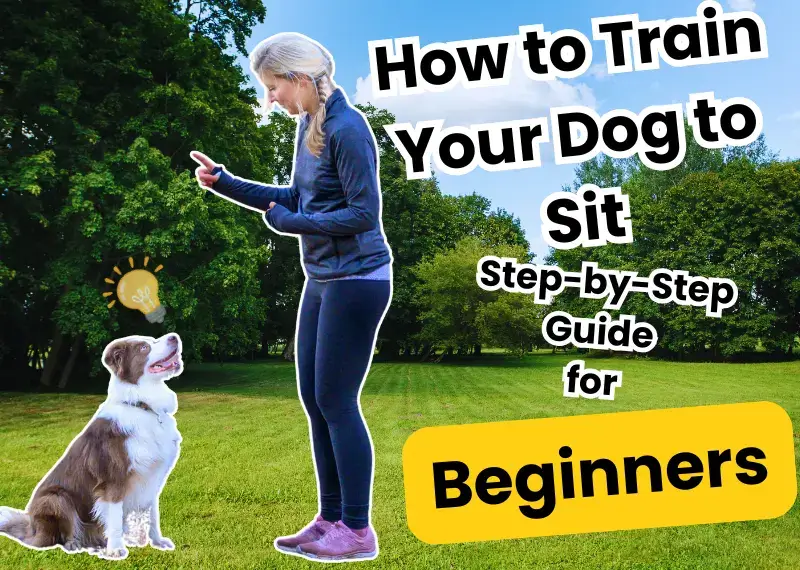

How to Train Your Dog to Sit: Step-by-Step Guide for Beginners
Teaching your dog to sit is one of the most useful and fundamental commands in dog training. Not only does it help manage behaviour, but it also builds the foundation for other commands like stay and down. Whether you’re working with a new puppy or an older dog, this guide will show you how to train your dog to sit using positive reinforcement and simple techniques that actually work.
Table of Contents
Step 1: Lure Your Dog Into Position
The easiest way to start is with a treat.
- Hold a treat close to your dog’s nose.
- Slowly move your hand up and over their head.
- As their nose follows the treat, their bottom naturally lowers into a sitting position.
- The moment their butt touches the ground, mark the behaviour with praise (e.g., “Good boy!”) and immediately reward with the treat.
👉 Pro Tip: Don’t say the word “sit” the first few times. Wait until your dog consistently follows the hand motion before pairing it with the verbal command.
Step 2: Pair the Command With a Hand Signal
Once your dog understands the luring motion, start adding the verbal cue:
- Say “Sit” right before moving your hand.
- Reward and praise them as soon as they sit.
Repeat this until your dog consistently associates the word sit with the action.
Step 3: Wean Off the Hand Signal
Your goal is to have your dog respond to your voice command alone.
- Gradually make your hand motion smaller and smaller.
- Keep your body language neutral—avoid leaning or nodding.
- Practice until your dog sits with only the verbal cue.
👉 Important: Timing matters! Reward immediately when your dog sits. If you delay, they may think standing up is part of the command.
Step 4: Introduce a Variable Reward System
In real life, you won’t always have treats on hand. That’s why you need to shift from rewarding every time to rewarding occasionally.
- Start by rewarding every sit.
- Then, reward randomly—sometimes after 2 sits, sometimes after 3.
- Always mark the behaviour with praise, even if you don’t give a treat.
This keeps your dog motivated, since they never know when the treat will come!
Step 5: Build a Silent Stay (Without Saying “Stay”)
Once your dog can sit reliably, it’s time to teach them to stay in position without needing a separate “stay” command.
- Ask your dog to sit.
- Praise immediately (“Good boy!”), But hold off on giving the treat.
- After a short pause, release them with a word like “Free”—then give the reward.
👉 Use an uncommon release word like “Free” so it’s not confused with everyday language.
Over time, increase the duration before releasing. If your dog breaks the sit early, simply reset them without giving a treat.
Step 6: Practice in Daily Life
Short, frequent training sessions work best.
- Ask for a sit before meals.
- Ask for a sit before going outside.
- Ask for a sit before petting.
By weaving training into daily routines, you’ll reinforce the behavior naturally.
Common Mistakes to Avoid
❌ Delaying the reward (dog may confuse sit with stand).
❌ Relying too much on hand signals or body language.
❌ Moving to variable rewards too quickly.
❌ Skipping practice in real-life settings.
Final Thoughts
Teaching your dog to sit is the first step toward a well-behaved companion. With patience, consistency, and positive reinforcement, your dog will quickly learn to respond to your voice command—without needing a treat every time. Practice in short bursts, integrate it into daily life, and soon sitting will become second nature to your pup.
Frequently Asked Questions
How long does it take to teach a dog to sit?
Most dogs can learn the basics in just a few short sessions, but consistency over several days or weeks will make the command reliable.
Can you train an older dog to sit?
Yes! Adult and senior dogs can learn to sit using the same positive reinforcement techniques as puppies.
Do I need treats forever to get my dog to sit?
No. Start with treats, then gradually shift to a variable reward schedule where praise, petting, or play also act as rewards.
What if my dog won’t stay sitting?
Use a release word like “Free” and practice increasing duration slowly. If they stand up too soon, reset calmly and try again.